Tuesday, 22 November 2016

Nigerian Govt set to inject $3.2bn into Bank of Agriculture

The federal government of Nigeria wants to inject one trillion naira into the Bank of Agriculture to ensure credit accessibility to farmers in the country.
The Minister of State For Agriculture Heineken Lokpobiri revealed this while speaking in Yenagoa on the 2016 “Farmers Day” with the theme “Sustainable Farming For Sustainability”.
He also appealed to the people in Niger Delta to embrace peace and focus on agriculture and stop the destruction of oil and gas pipelines.
Lokpobiri says this act destroys the country’s ecosystem and economy.

Source: TVC News

Monday, 21 November 2016

Nigeria poised to become Africa’s GMO superpower, overcoming NGO scare campaigns

The Nigerian Academy of Science (NAS) declared this week that genetically-modified foods are safe for consumption. The NAS, citing overwhelming evidence from developed countries and thousands of studies, said the country was ready for the products and that they were safe for production and beneficial to the nation.
The academy noted that the technology, although it does leave some fearful and concerned, would be useful to the country because of its potential to boost the nation’s agriculture, which could help bio-1728x800_caddress food insecurity. These statements reaffirmed the path forged in 2015 with the passage of a Biosafety Law by the Nigerian National Assembly and its signing by former President Goodluck Jonathan.,
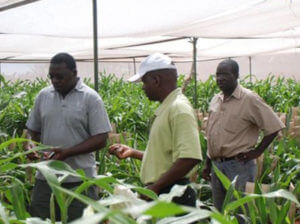
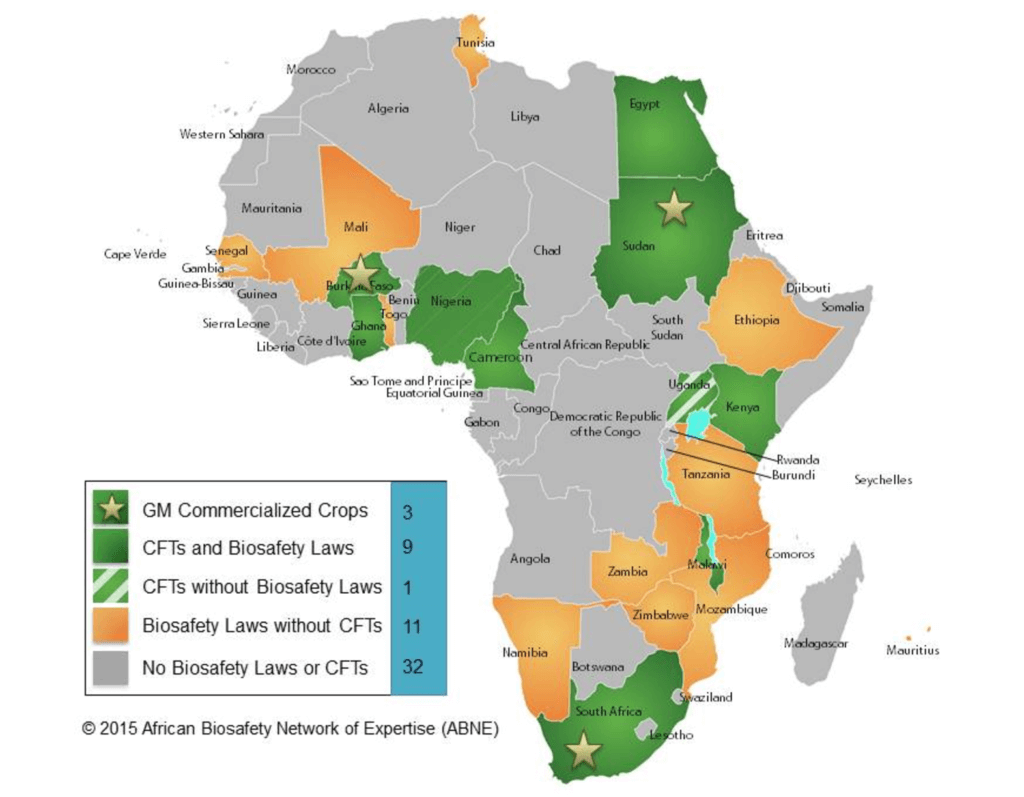
Nigeria is now poised to join Egypt, Burkina Faso, South Africa and Sudan as the only nations in Africa to cultivate genetically engineered crops. Although no GE crops are presently being grown commercially, the government has sanctioned several trials, which if successful could result in the greenlighting of insect-resistant Bt cotton, cowpea (a legume) and corn; disease resistant and Vitamin A cassava; and nitrogen and water efficient rice.
There is also strong and growing support in the farming community for the use of GMOs, said Chris Onwuka, the National Vice President of the All Farmers Association of Nigeria (AFN). “The truth is that without biotechnology, we cannot feed ourselves…. By 2030, Nigeria’s population will have crossed 250 million. Without a technological intervention, and with a continuous decrease in arable land due to urbanization, desertification and erosion of farmer’s yield are only going to decrease.”
If the rollout schedule goes as planned, Nigeria could open the door to a fresh wave of crop biotechnology introductions throughout the continent. To date, anti-GMO non-governmental organizations (NGOs) linked to activist groups in Europe and the United States have successfully mustered scare campaigns, deterring many governments from introducing GE crops, including numerous disease and insect resistant varieties.screen-shot-2016-11-18-at-10-08-51-am
Anti-GMO NGOs
The passage of the Biosafety Bill was not without controversy as there was and is opposition within Nigeria to GE crops.
  • Reflecting the sentiments of many anti-technology non-profits,Jibrin Ibrahim of the Center for Democracy and Development wrote in an opinion piece, “Given our fragile ecosystems and stressed environment, we must take our biosafety seriously and avoid the path of introducing crops that are dangerous to the health of our people and our environment.”
  • In March 2016, some 100 groups representing about five million people, including farmers, faith-based organizations, civil society groups’, students and local community groups, wrote a letter to biosafety regulators objecting to Monsanto’s attempts to introduce GM cotton and corn into Nigeria. They cited numerous health and environmental concerns as their reason for their opposition.
  • The Global Prolife Alliance has said, “Over time, very disastrous consequences of GMO foods are emerging. The mixing of genes from totally unrelated species through genetic engineering is unleashing unpredictable side effects, including new toxins, allergens, carcinogens, nutritional deficiencies and possibly Monster humans from birth defects.”
  • In a letter written to the Vice President on May 5, 2016 a coalition of civil society groups led by Jackie Ikeotuonye, the Executive Director of the Initiative for Peace, Empowerment and Tolerance, said the National Biosafety Management Agency was jeopardizing the health of Nigerians and mortgaging the country’s future by ignoring concerns about GMOs.
It should be noted that there is no scientific evidence to support any of these claims or any notion that GMOs are dangerous to human health or the environment. In its most recent report on GMOs, the US National Academy of Sciences cited this week by its Nigerian counterpart, once again reiterated that they were safe for human consumption and posed no hazards that are not also present in conventional or organic agriculture. The International Society of African Scientists has also publicly said that GMOs are safe for human consumption and support their use.
Nigerian officials seek to persuade nation on GE safety
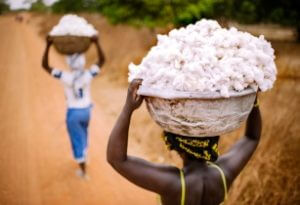
The government has been campaigning to reassure the public about the safety of GE crops and tocottonpromote their benefits to the agricultural sector.Rafus Ebegbe, the Director General of the National Biosafety Management Agency, said he expects the first GMO crop, Bt cotton, to be commercialized in 2018:
Our duties as an agency…is to provide assurance of regulated use of modern biotechnology for increased productivity in the agricultural sector that would lead to improved socio-economic development of Nigerian farmers and enhanced national economic prosperity.
We serve as a safety gauge for the deployment of genetic technology in the country. It is our responsibility to ensure that the application of the technology does not in any way affect human beings or the environment…With the technology, scientists can undertake the development of plants or organisms that can reduce the impact of climate change and serve in pollution remediation and improve the health sector using various plants that abound in the country.  It can also enhance our food quality and make farmers get rewards for their hard work as they will have access to quality seeds…We are not promoters of biotechnology, but regulators to ensure that it use does not in any way jeopardize the health of Nigerians or the environment.
Wakama Belema Asifieka, the Permanent Secretary of the Ministry of Science and Technology, said the Ministry had to address the mistaken fears of a segment of the society that promoters of biotechnology were out to endanger lives. “It is imperative for us at the ministry…to correct this belief in view of the fact that there are no significant empirical evidence to show that GMOs are harmful to both humans and the environment.”
Professor Lucy Ogbadue, the Director-General and the Chief Executive Officer of the National Biotechnology Agency, has said, “the campaign by some individuals and organizations that GMO foods are unhealthy was a falsehood concocted to deceive the public.”
What GE crops could mean to Nigeria
GM technology is one means of bolstering the agriculture sector and thus diversifying an economy that has become overly dependent on the oil and gas sector. According to the IMF, the energy sector accounted for 91.9 percent of exports and was responsible for generating 46.6 percent of government revenue in 2015. As a result, the decline in oil prices has had a very detrimental impact on the economy. After expanding by 2.7 percent in 2015, the IMF is forecasting the economy fell by 1.7 percentfarmer_7968322159this year and will grow by just 0.7 percent in 2017.
Before the development of its oil resources, Nigeria was a major food producer and exporter. Agricultural products accounted for 70 percent of exports and were responsible for providing 95 percent of the domestic food requirement, and agricultural export taxes were the largest source of government revenue. However, farming was neglected as Nigeria emerged as a major oil producer and exporter. As a result, the country is now heavily dependent on food imports to feed its growing population. Imports of rice (Nigeria is the second largest importer of rice after China), wheat, sugar, and fish, for example, total about $3.18 billion a year.
GM cotton could revive the textile and clothing sectors, which have been hampered by declining cotton production and a surge in clothing imports from China. In 2015, cotton output was 250,000 bales. This was well below the recent peak production of 459,000 bales in 1995. The Nigerian Textile Manufacturers Association has come out strongly in favor of the adoption of Bt cotton. Its Director-General, Hamma Kwajaffa, believes Bt cotton is “capable of repositioning the morbid textile industry.” He also said it would improve cotton lint quality and farmers would benefit from increased yields due to reduced insect-pest damage.
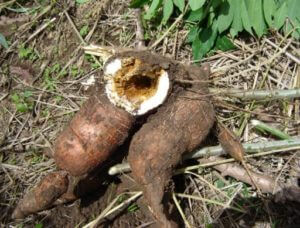
GE technology could also be deployed to protect the cassava crop from disease and increase itsimage014nutritional content. This is especially important as cassava is a major crop. Nigeria is the largest producer of cassava in the world, producing about 45 metric tons a year. It is grown by over 4.5 million people and is a major food crop, accounting for 9.7 percent of total caloric intake. This is the third largest source of calories after yams and rice and corn, which are tied for second place. However, the cassava crop is threatened by brown streak virus, which could severely reduce production if not contained. Scientists at Nigeria’s Institute of Tropical Agriculture are working on biotechnology solutions to combat the virus. It is also working to make cassava pest and drought resistant, reduce its cyanide content and fortify its nutritional content.
With the largest population and economy in Africa, Nigeria’s embrace of GMOs could be a game-changer in spreading African acceptance of the technology. “If Nigeria gets it right, it will guide other African nations,” said Amina Mohammed, the Minister of the Environment.
Even if anti-GMO NGOs are successful in scaring other African nations from adopting biotechnology Nigeria’s new generation of innovative crops will find their way across the continent. The country has very porous borders, and smuggling is rampant. As a result, GE seeds sanctioned for use in Nigeria are likely to be smuggled into neighboring countries, none of which has authorized their use for commercial production. This might prompt these nations to reconsider their bans on growing GMO crops and eventually lead to broad acceptance throughout the continent.
Steven E. Cerier is an international economist and frequent contributor to the Genetic Literacy Project.

Flour millers donate seedlings, equipment to wheat farmers

Flour Milling Association of Nigeria (FMAN), at a meeting in Kano, demonstrated its support for the accelerated local production of wheat in Nigeria by donating 2,500 units of three-inch water pumps and 2,500 units of plantable seeds in 50kg bags worth about N150 million to Wheat Farmers Association of Nigeria (WFAN).
The donation was in fulfilment of promises made at an MoU signing ceremony on June 7, 2016, in the office of the Minister, Federal Ministry of Agriculture and Rural Development (FMARD), Abuja, where FMAN promised, among other things, to assist wheat farmers with the provision of farming equipment like water pumps, threshers and seedlings to boost wheat production, in line with government’s policy to achieve food sufficiency and security, create jobs and reduce dependence on importation. The signing of the MoU was described as the beginning of collaboration and co-operation between wheat farmers and flour millers.
In his speech at the occasion, the Vice Chairman of FMAN, Mr. Olarenwaju Jaiyeola, noted that history was being made in Nigeria with the signing of the MoU between both associations with the primary goal of accelerating wheat production in Nigeria.
He noted that the event in Kano was another historic and remarkable one in fulfilment of FMAN’s promise to WFAN having met and interacted with wheat farmers to ascertain their immediate needs.
The Vice Chairman added that the effort was to assist farmers in some wheat growing states to ameliorate some of the challenges faced by farmers particularly with regards to scarcity of seedlings.
Jaiyeola was pleased to reveal that in demonstration of FMAN’s deep grounded interest, passion and commitment to accelerate wheat programme in Nigeria, it released a Research and Development Grant of N20 million to the Lake Chad Research Institute (LCRI) in September 2016.
“The fund is to enable LCRI conduct research into improved wheat farming, wheat technology and modern agricultural practices aimed at developing improved wheat varieties with good yield.  In addition, we expect that the grant will support the institute in the training and dissemination of information to wheat farmers in Nigeria,” he further disclosed.
He seized the opportunity to reiterate FMAN’s strong conviction that Nigeria would be self-sufficient in wheat production if all parties and key stakeholders were determined and worked together with sincerity of purpose.
He said, “we see our role as complimentary to government’s policies and measures, particularly the Central Bank of Nigeria’s (CBN)’s Anchor Borrower Programme (ABP) aimed at transforming how the financing of small-holder agriculture is addressed.”
Jaiyeola promised to continue to demonstrate FMAN’s support to wheat farmers from time to time with whom they were forging excellent and beneficial working relationship.
The President of the WFAN, Alhaji Salim Saleh Muhummad, expressed pleasure with the development where flour millers are collaborating with wheat farmers to improve wheat farming in the country for self-sustenance and utilisation, especially in the area of guaranteed market and support with input to farmers.
FMAN’s Executive Secretary, Alhaji Olalekan Saliu, acknowledged the commitment and pioneering role of the Governor of Kano State, Dr. Abdullahi Umar Ganduje, and the Governor of Kebbi State, Alhaji Abubukar Atiku Bagudu. He thanked the two governors for their initiatives and support to farmers and the wheat value chain, expressing FMAN’s appreciation to the CBN for its well thought out ABP, a source of great financial support to Nigerian farmers.
He acknowledged the leadership role, encouragement and support of the Minister of Agriculture and Rural Development, Chief Audu Ogbeh, who is championing great transformation and achieving major breakthroughs.
Alhaji Saliu also appreciated the efforts of Dr. O. Olabanji of the LCRI and members of his team in the wheat value chain.

Credit: Nigeriatoday

Kebbi calls on farmers to repay agric loans

Gov Atiku Bagudu
Gov Atiku Bagudu
The Kebbi State Government has called on the farmers who benefited from the CBN Anchor Borrowers’ agricultural loan programme to hasten repayment for others to benefit.
Alh Garba Dandiga, the state Commissioner of Agriculture, made the call in an interview with the News Agency of Nigeria (NAN) in Birnin Kebbi on Monday.
He said the beneficiaries were expected to repay the loans in cash or in kind, adding that “an individual farmer or group may repay in cash or with bags of paddy rice”.
He said the loans were not free and warned the beneficiaries to hasten repayment to avoid sanctions, stressing that all those who received the loans must repay.
Dandiga said the government had directed APC chairmen at local government and ward levels to deliver the message to the beneficiaries, adding that “we will soon begin media jingles on repayment of the loans”.
He said 78,000 farmers benefited from the loans which were aimed at mass production of rice and wheat to boost food security.
NAN reports that the Federal Government is targeting production of one million metric tons of paddy rice under the programme.

Credit: PMNews

N700bn poultry products smuggled into Nigeria yearly –PAN

In preparation for its 2016 National Poultry Show in Abeokuta, the Poultry Association of Nigeria (PAN) has lamented the influx of smuggled chicken into Nigerian market, estimated at N700 billion annually.
According to the National President of the association, Dr. Ayoola Oduntan, smuggling of poultry products into Nigeria, is a major challenge killing the sector.
Oduntan who spoke at a press conference in Lagos, to announce the National Poultry Show, holding between November 29 and 30 in Abeokuta, with the theme “Sustaining the Poultry Industry in an Economic Recession”, said that Customs Service is working daily to see that the figure and amount spent on smuggling of chicken reduces.
He said that the eradication of imported poultry products in Nigeria would create hundreds of billions in the economy in revenue and create 1 million employment opportunities within 2 years. He said that government is trying in terms of support but it needs do more.
However, he emphasised that there is a vast array of employment opportunities lying within the poultry value chain, adding that the government and people must take it seriously to ensure that it is not only sustained but also made to grow, as agriculture is truly the future of the nation’s economy.
Speaking on the importance of the poultry show, Oduntsn said: “The show takes place yearly to showcase businesses within the poultry value chain. The show is organised in furtherance of the activities making up the poultry industry calendar, which usually commences with a summit at the start of the year before the poultry show.
On who should attend, the Chairman, Poultry Association of Nigeria, Lagos State chapter, Pastor Bode Adetoyi, said all businesses within the poultry value chain including poultry farmers, feed millers, egg and chicken sellers, financial and governmental organizations and those involved in transportation within the poultry value chain will benefit greatly from the Show. There will be exhibitors from Nigeria, Netherlands, Chine, India, Israel, Spain and England.
The President then called out yet again to concerned government bodies, poultry farmers, traders, supermarkets, distributors, packaging manufacturers, investors, international agriculture bodies and all businesses within the Poultry value chain to make it a date to visit the Poultry Show.

Credit: Nigeriatoday

Kogi to Plant 21, 000 Hectares of Cassava Next Year

As part of Kogi State government drive towards actualising the drift from subsistence farming to agriculture as business,  the state government is to facilitate the planting of over 21,000 hectares of cassava farms in 2017.
The acting Permanent Secretary, Ministry of Agriculture, Dr Isah Ochepa    disclosed this at a meeting of the state agricultural Core Delivery Team (CDT) in Lokoja.
Ochepa said farmers in each of the 21 Local Government Areas of Kogi were expected to cultivate 1,000 hectares each to make up the 21,000 hectares.
Also speaking at the meeting, acting Managing Director of the state Agricultural Development Project (ADP), Mr. James Ogunmola said efforts were also being made to train farmers on preservation of orange flesh sweet potato vines.
This, according to him, is to enable preservation of the vines for distribution to farmers during the next rainy season adding that government had planned to embark on mass production of the orange flesh sweet potatoes.
He said that the nutritional value of the vegetable crop was high and had been recommended particularly for children and adults especially, diabetic patients.
The Managing Director said the decision to produce the potatoes in large quantity was made against the backdrop of the school feeding scheme being contemplated by the state government.
Ogunmola described it as a women-friendly crop being planted in Kenya and Tanzania saying that assimilation of its carbohydrate content during metabolism was gradual and not at once as with others.
Speaking earlier, Mr. Victor Adejoh, Team Lead of Synergos Nigeria, organisers of the CDT programme said the meeting was aimed at engaging government representatives on the need to provide for activities of the State Partnership for Agriculture in 2017 budget.
Adejoh said Bill and Melinda Gates Foundation (BMGF) providing support for the various SPA programmes through Synergos, wanted to see that certain monetary provisions were made for the partnership to show the seriousness of government in transforming agriculture.
“I appeal to CDT members and key budget leaders to have the SPA captured. The target of Synergos in the SPA is to develop an all-inclusive policy to drive the transformation from subsistence farming to agriculture as business”, he said.
Source: Nigeria Today

Coconut farming as huge forex earner

Stories by Steve Agbota

Image result for coconut
source: organicfacts.net
Cash crops have been creating millionaires, jobs and sustaining the economy of many nation around the world, just as coconut represents golden chance for Nigeria to rake in over $2.5billion annually.
However, some cash crops in the country like cocoa, cashew, soybeans and others have also penetrated international markets, where the demand for these crops are huge. But unfortunately, coconut value chain remains untapped in the country.
Booming global demand for coconut water, oil and other bi-products is a significant opportunity for the crop to boost exports and job creation.
Recently, the Chairman of Nigeria Agribusiness Group (NABG), Mr. Sani Dangote, said Nigeria was losing $1billion yearly from untapped potential in coconut business. He said the losses came because the country was neither developing coconut value chain for domestic use nor exporting it to meet global demand.
He said the potential of the coconut industry to improve the country’s economy and lift coconut farmers from poverty has not yet been fully maximised.
The coconut industry in Lagos alone has huge potential that can contribute to the nation’s Gross Domestic Product (GDP) but needed investment to improve yield, including using hybrid varieties of seeds. On how to become a successful coconut farmer, the Deputy Managing  Director of Peniel Gerar International Limited, Ojiefoh  Enahoro Martins, said that the potential in coconut farming is huge as export  market  for the product is increasing  every  day. He said potential farmers and investors should consider some factors before venturing into the coconut farming business.
Climate
He said coconut needs rainfall level of between 1000 mm. to 3000 mm., 2000 ft and 70 per cent of air moisture, good draining facility, sandy soil rich in humus content, in depth of 3 mts. and soil PH from 6 to 7. He explained that coconut  requires temperature from 27˚ Celsius to 36˚ and the tree needs sunlight most but day and night temperature variation at 5˚ Celsius.
Cost of setting up coconut plantation
He said the cost to set up a coconut plantation would obviously vary according to location. The key variables are usually tied to the land (eg. terrain and contour, soil type) and also farm input costs (eg. labour costs, fertilizer prices, planting material costs). Thus, the following costings should be taken only as an approximation to the costs of starting a coconut plantation: Cost of  land per hectare N5000, cost of  labour N30,000, cost planting,  digging  and covering  per hole N60, cost of  coconut  seedlings for planting in Nigeria   N100 per one and weeding  for the  first three months N5000.
Land spacing, lifespan
For one acre 25 feet by 25feet spacing, he said, it is recommended to grow 70 trees per acre.
Generally, he said a square system of planting is preferred  in West Africa, with a spacing of 7.5 x 7.5 metres, which will accommodate 178 coconut palms per one hectare. However, a spacing of seven to 10 metres is practised in many coconut farms, and the best planting  season  is between April and May. The harvest and fruiting  strength  is more 30  years.
Numbers of coconut on a tree
He said that the coconut hybrids can give 250 coconuts per tree per year, leading to annual production of one to 17,000 coconuts per acre, approximately 500 million of water while  it gives 200 nuts per tree, which means about 3 ½ tonnes per acre and it gives about 60 per cent of oil. “I advised  farmers can do inter-cropping for first three years, but also plant crops like legumes that should be smaller in size. I also recommend  the use  of hybrid coconut. The main advantage of hybrid plants is that they start flowering from the second year, by third year all the trees will come to flowering stage and from the fourth year all the trees will start to give the yield.”
Where potential farmers can get supports
He said that anybody who wants to venture into coconut farming should approach Nigeria  Seed Council, Ministry  of Agriculture and Rural Development and Bank of Agriculture (BoA). These are the bodies that can give required support.
Varieties
According to him, though many varieties of coconut exist, Western Tall, Tall X Dwarf types of trees are planted for nuts and oil.
Dwarf varieties like Savukot, MalaionEllo Orange and Savukot Green are planted for tender coconut. For big nuts Yazpanam trees and for more nuts Ayiram Kaichi trees are suitable. Likewise Latchaganga released by Central Plantation Coconut Research Institute at India and Philippines is a good yielding avariety. VHC3 variety released by Tamil Nadu Agriculture University in the year 2000 is a high yielding variety. He added: Tall hybrids and dwarf are  the major  varieties  we have in Nigeria.
States where  coconut can grow
He explained that in Nigeria, the leading producing states out of the 20  are Niger, Kano, Jigawa, Zamfara,Kebbi, Sokoto, Katsina, Kaduna, Adamawa, Yobe, Borno, Taraba, Plateau, Nasarawa, Bauchi, Lagos and Ogun states. He explained: “The market for coconut  is still 100 per cent viable  for investment. We are tapping  into this goldmine-like opportunity. Next year, we are set to  launch 2000  coconut  estate phase one in Edo state and our target  is the US coconut  oil  production  market.”
On the possibility of coconut estate in Nigeria
Said he: “We can have coconut  estate in Nigeria  and make millions without  stress. The opportunities  in coconut  business  is still 95 per cent untapped. Why I encourage  investors  to  go into  coconut  farming is that the market  demand is high  both locally and internationally and return  on  investment  is 80 per cent minimum, while the risk is about one per cent. “At this instance I would also like to put forth the idea that the scientists should apply their education and make strenuous efforts in innovating new methods of coconut crop cultivation, for enhancing the standard of living of the farmers and lead the nation to a greater development”.
Coconut oil is one of the by-products ofthe fruit and is seen as having a variety of applications in beauty, health, and cooking.
Coconut is a very versatile useful plant with a wide range of products being sourced from it. Coconut products are used to make everything from clothing to animal feed to beauty creams. Its kernel is harvested for its edible flesh and delicious water, while its husk is used for its strong fibers.
Most importantly, however, are its oils, which are extracted, processed, and marketed for culinary, medicinal, and cosmetic uses alike.
Typically, the flesh is first dried down to six per cent moisture to make copra. This product is then hauled to factories across the world where it is manufactured into oil. Less widely used, but more valuable, “virgin” coconut oil is directly extracted from raw coconut.
Credit: Nigeria Today