Monday, 22 February 2016

Organic Meat and Milk Higher in Healthful Fatty Acids

Credit
                                                        Matthew Staver for The New York Times
Organic meat and milk differ markedly from their conventionally produced counterparts in measures of certain nutrients, a review of scientific studies reported on Tuesday.
In particular, levels of omega-3 fatty acids, beneficial for lowering the risk of heart disease, were 50 percent higher in the organic versions.
“The fatty acid composition is definitely better,” said Carlo Leifert, a professor of ecological agriculture at Newcastle University in England and the leader of an international team of scientists who performed the review.
The European Commission, the executive body of the European Union, and the Sheepdrove Trust, a British charity that supports organic farming research, paid for the analysis, which cost about $600,000.
However, the question of whether these differences are likely to translate to better health in people who eat organic meat and drink organic milk is sharply disputed.
“We don’t have that answer right now,” said Richard P. Bazinet, a professor of nutritional sciences at the University of Toronto who was not involved with the research. “Based on the composition, it looks like they should be better for us.”
The two new scientific papers, published in The British Journal of Nutrition, are not the result of any new experiments, but instead employ a statistical technique called meta-analysis that attempts to pull robust conclusions out of many disparate studies.
They are certain to further stir a combative debate over whether organic foods are healthier. Some scientists assert that organic and conventional foods are nutritionally indistinguishable, and others find significant benefits to organic. Many people who buy organic food say they do so not for a nutritional advantage, but because of environmental concerns and to avoid pesticides.
The higher levels of omega-3, a type of polyunsaturated fat, arise not from the attributes usually associated with organic food — that the animals are not given antibiotics, hormones or genetically modified feed — but rather from a requirement that animals raised organically spend time outside. Organic milk and beef come from cattle that graze on grass, while most conventional milk and beef come from cows subsisting on grain.
“It’s not something magical about organic,” said Charles M. Benbrook, an organic industry consultant who is an author of the studies. “It’s about what the animals are being fed.”
Most of the same changes would be observed in conventionally raised animals that also grazed for the majority of their diet, the scientists said.“For once, this is a pretty simple story,” Dr. Benbrook said.
The review of comparisons of organic and conventional milkanalyzed all 196 papers the scientists found. Because studies of meat are sparser, they could not look at just one type of meat like beef or pork. Instead, they did one analysis of the 67 papers they found for all types of meat. “Only if you throw them all in one pot can you do a meta-analysis,” Dr. Leifert said.
Two years ago, Dr. Leifert led a similar review for fruits and vegetables that found organic produce had higher levels of some antioxidants and less pesticide residue than conventionally grown crops.
Nutrition experts broadly agree that omega-3 fatty acids in food offer numerous health benefits. When the United States Department of Agriculture revised its dietary guidelines in 2010, it urged people to eat more seafood, which is rich in omega-3.
Omega-3 is much more prevalent in grass than in grain, which is why organic livestock and milk also contain higher levels. “Lo and behold, we altered in some fundamental ways the nutrient intake of these animals and hence the nutrient composition of the products that we derive from those animals,” Dr. Benbrook said.
The new analysis found that levels of another polyunsaturated fat, omega-6, were slightly lower in organic meat and dairy. Omega-3 and omega-6 are essential for the functioning of the human body, which can make neither. But some have argued that a skewing toward omega-6 has become unhealthy.
Centuries ago, people ate roughly equal amounts of the two fatty acids. Today, most Americans eat more than 10 times as much omega-6, which is prevalent in certain vegetable oils and thus also fried foods, as omega-3.
In an email, Dr. Walter C. Willett, the chairman of the nutrition department at the Harvard T.H. Chan School of Public Health, said the differences between organic and conventional beef were trivial, and the amount of saturated fat in both were high.
“Far greater, and beneficial, differences in fatty acids are seen if poultry and fish replace red meat,” Dr. Willett said.
A shortcoming of the recommendation to eat more fish is that if everyone followed it, the rivers, oceans and lakes would be emptied of fish. Dr. Bazinet of the University of Toronto said perhaps encouraging people to switch to organic meats and milk would be “a way to kind of get at them with the foods they’re already eating.”
Dr. Bazinet said observational studies suggested that adding 200 milligrams a day of omega-3s to an average diet should yield health benefits. Switching to organic beef would add about 50 milligrams. “Eating one grass-fed beef serving per day is not going to do it,” he said.
But if combined with a couple of glasses of organic milk, “it should make a difference,” Dr. Bazinet said. “That would be the hypothesis.”
Scientists are now trying to examine the health question more directly.
Dr. Leifert cited several studies that indicated that infants of mothers who ate organic fruits and vegetables were less likely to contract some diseases. He is also conducting experiments to see if rats fed organic foods are healthier. So far, he said, it appears that crop pesticide residue does have measurable effects on the rats’ hormones.
“We still don’t know whether it kills you, but we do know it has an effect on hormonal balances,” he said. “It’s something that makes you think a little bit.”

Source: http://well.blogs.nytimes.com

Friday, 19 February 2016

President Buhari Bows To Pressure, Relaunch Jonathan’s YouWiN Programme

Goodluck Jonathan during his reign as Nigeria’s President initiated the YouWin! Small and Medium Enterprise, SME Growth Fund responsible for creating over 22,000 jobs – but as Muhammodu Buhari took over as President, it was put on hold with intention to scrape.
However, a source revealed that Buhari has succumbed to pressure and has given his approval for the YouWiN relaunch.
The source disclosed that Buhari was initially unconvinced about the programe but finally bowed to pressure to continue with YouWiN but, albeit, under a new name.
This laudable project was began by former president Goodluck Jonathan with sponsorship from World Bank under the coordination of Dr. Ngozi Okonjo-Iweala.
Former Finance Minister Okonji-Iweala with YouWiN winners
This affected the payment of the YouWiN3 Awardees who up till now have not received their 2nd and 3rd tranches. Expectedly, this has affected their businesses threatening them to the point of folding up if nothing is done to pay them the remaining funds.
In order not to get Nigerians talking about the government copying the works of the “ineffectual Buffon” as tagged by The Economist, a new name and a new platform has been created.
The YouWiN Programme has been renamed “BUSINESS INNOVATION GROWTH (BIG)” by the Buhari administration.
Interested Nigerians can log into the new website and enter for the competition: www.bigportal.org.ng
HISTORY
imageFrom 2012 to 2015, the Jonathan government gave away over $100 million dollars to over 3,000 entrepreneurs as part of the YouWin competition. More than $50 million has already been disbursed. The winning entrepreneurs have received grants averaging $50,000 dollars to start or expand a business, and thus create jobs. Only people ages 40 and younger were allowed to apply.
In 2011, the former Nigerian President Goodluck Jonathan formally launched the first round of the business competition YouWin.
In the first of four rounds, the government granted $58 million to 1,200 entrepreneurs.
Goodluck Jonathan had the following words for YouWiN;
BILL GATES’ MICROSOFT AND MARK ZUCKERBERG’S FACEBOOK ARE ELOQUENT TESTIMONIES TO THE CAPACITY OF THE YOUTH TO DREAM BIG AND WIN BIG IN AN INNOVATIVE MANNER. WE HAVE SUCH MEN AND WOMEN IN THIS LAND TOO: OUR CHALLENGE IS TO FIND THEM EARLY, NURTURE THEM AND ENCOURAGE THEM.”
WORLD BANK on YouWiN
In August 2015, the World Bank published an evaluation of the YouWin program by the economist David McKenzie. McKenzie analyzed survey data on the 1,920 firms three years after the program began, and found that the grant had a larger impact than he expected. The selected firms were substantially more likely to launch, survive, make profits, and, most importantly, to generate new jobs.
Of the firms evaluated, approximately 60% were new and 40% already existed. McKenzie analyzed these groups separately.
The main impact of the grant was that it seemed to have helped firms get off the ground and survive. Three years after the competition, 91% of entrepreneurs who launched their business after winning the grant were still in operation compared to only 54% of the losing entrepreneurs. For existing businesses, 96% of the grant-winners survived, while only 76% of the losers continued to operate.

Aregbesola Moves To Explore Agriculture To Rescue Osun Economy

aregbesola_-_copy1
Gov. Aregbesola
In a bid to cushion the effect of the current economic downturn on the residents and government occasioned by the dwindling revenue from the federation account, Osun State government has renewed its commitment and called on the people to embrace farming as the only alternative way out.
Governor Rauf Aregbesola recently noted at a gathering that the situation with the drop in oil prices and the sharp reduction in the federation accounts from N1.2 trillion in 2012 to N369 billion in November allocations shared in December 2015 has reduced the running of government to little or nothing hence, the need to look inward in increasing IGR.
Apart from measures government is taking to revive the state’s economy, Governor Aregbesola further promised the readiness of his administration to render assistance to young graduates and people having interest in agriculture.
Recently, the state government signed a Memorandum of Understanding (MoU) with the International Institute of Tropical Agriculture (IITA) for the establishment of a demonstration farm at Ago Owu Farm settlement in the state for best farming practices.
The state government, in the agreement, would make available 20,439 hectares of land at the farm settlement for the development of agriculture and production of massive food as alternative to reliance on the oil sector.
The demonstration farm centre is also for the purpose of conducting research and training young farmers in the state in modern, commercial and profitable farming. Under the agreement, the IITA will also carry out cassava, plantain and other crop multiplications.
Besides, the state late last year signed $50million Agriculture Investment with a United States of America (USA) firm for the provision of modern agricultural technological services, aimed at giving fresh impetus to its agricultural sector revolution drive in the state.
The MoU covered the development and infrastructural upgrade of breeding, fattening and processing of beef cattle ranches and the establishment of agricultural equipment leasing and hire centres to be managed by JIL farm Limited.
The government has also promised to reinvigorate the bee keeping business in the state to keep the youth especially young graduates as well as women busy and get them out of the problem of seeking none existing white collar jobs.
Speaking on the determination and commitment of the state government to boost agriculture, the National Coordinator of Federation of Bee Keeping Association of Nigeria (Southwest), Mr Femi Komolafe said that the state government is doing everything possible to reinvigorate agriculture as one of the strategies needed to transform the state.
Komolafe, an expert in bee keeping and one of the aides to Governor Aregbesola stated that aside from massive food production and generation of revenue from cash crops; the state is focusing on bee keeping.
He stressed that the state government has created a honey processing centre at Oyan, in Odo-Otin local government area of the state to standardise processing of honey to meet international specifications now that the world has discovered that African honey is the best organic honey from nectars of flowers.
According to him, “the world is looking for African honey this time around because they have discovered that it is the best because we are producing organic honey. It is honey that does not strive with sugar or any other thing. It is natural substance that was gotten from nectar of the flowers of the plants. So it is more nutritious than any other honey from other parts of the world.”
While stressing on the importance of honey, Komolafe noted that bee keeping business is generally acceptable worldwide unlike some agricultural produce such as piggery which is not embraced globally.
His word: “honey has been recommended as complete food that contains protein, carbohydrate, vitamins and the rest adding that there are lots of benefits from honey which makes it a veritable business.”
He emphasised that the state has made huge investments in processing of honey and other beehive products and intends to encourage the bee farmers in the state to process their honey in a modern way that would be able to match the international standard and make it exportable.”
“The Standard Organisation of Nigeria (SON) has also stepped up campaign on the processing of honey because it was discovered that most people that have been producing honey in the past are doing it in a crude manner that makes it not exportable.”
“For the processing of honey to be actualised in the state, we have designed a programme of mobilising more people into the honey business, encouraging them to produce more so as to meet the supply of honey and supply other bee products.”
“Arrangements have been put in place to organise seminar even for the existing bee keepers within the state of Osun and at the same time to encourage more people who are fresh to come into the business. Bee keeping is not a business that is difficult to learn. It is so easy to learn and manage, once you know the rudiments of handling the bee and managing apiary, the sky is the limit for anybody that goes into the business.”
“Apart from organising seminars, encouraging more people into the sector, we try to make sure that in each local government, the bee farmers organise themselves into cooperative bodies either having individual or joint farms in order to have access to funds from the Bank of Agriculture (BOA) and Bank of Industry (BOI).”
Komolafe explained that the state government has opened up windows of opportunities to all interested bee farmers in the state with the processing factory created at Oyan in Odo-Otin local government area of the state to mop up all the products and process them for export.
He declared that Beekeeping is a business that does not require more money to start unlike poultry and other agricultural business.
According to him, “Bees require no feeding; what they require is the house, where to house or hive the bees. We are so fortunate in this part of the world that we have vegetation and flowers that bees always exploit (the nectars). The nectar from flowers is what the bees always gather to make the honey.”
Unlike in the temperate region where they need to feed their bees, we don’t have that problem in this part of the country because we have enough vegetation that can give flowers at different period. It is from the nectars that the bees acquire what is needed to form their honey and other bee products.”
Also, Governor Aregbesola recently hinted of his plan to establish a Commodity Board that will ensure that Osun ranks among the best cocoa producers in Nigeria within the next two years.
Meeting with produce merchants in the state recently, Aregbesola stated that with the new cocoa development initiatives in the state, fresh revenues will be available to the state thus making the economy of the state prosperous in 2016.
The governor noted that the state will soon bounce back‎ with the identification of 60 million Cocoa trees presently in the state, adding that government henceforth will criminalise any action of farmers and merchants that runs afoul of government laws on cocoa.
He pointed out that government will soon be registering all farmers in the state for easy implementation of government policies on agriculture thus giving adequate room for monitoring and giving the necessary support for farmers.
According to him, “To show the people of the state that we are ready to face agriculture squarely in Osun, I am establishing a Commodity Board that will be supervised directly from the office of the governor.”
“Our bags of cocoa in Osun will be branded; government will be able to ensure that the quality of cocoa coming out of the state meets international quality standards. When there was free money coming from oil, no government was looking at what cocoa could bring to the economy; we are back to the days where cocoa will be the main stay of our economy in Osun.”
Aregbesola hinted that produce tribunals will be set up across the state and that a special colour will be given to vehicles transporting cocoa within the state.
The governor reminded produce merchants of the immense wealth that cocoa alone brought to the Western Region and the good use to which the revenues were put by the then governments.
Meanwhile, the managing director of Osun Investment Company, Alhaji Bola Oyebamiji disclosed recently that the company alone has cultivated no fewer than 1,500 hectares of cocoa at Ibokun in Obokun local government area and Iwo in Iwo local government area of the state all in an attempt to boost the economy of Osun State.
The old Western Region under the administration of the late sage, Chief Obafemi Awolowo made landmark achievements in the region without oil but relying on agricultural produce. Aregbesola is ready to follow suit.
Source: Leadership

N500b cash for traders, farmers, artisans coming

Over two million traders, farmers and artisans will receive N500 billion micro-credit to be managed by the Bank of Industry (BoI). It is tagged: N500 billion Social Protection Programme for 2016.
Speaking yesterday, Minister of Industry, Trade and Investment, Dr Okechukwu Enelamah said the ministry  will be rolling out programmes and initiatives focused on supporting micro, medium and small enterprises (MSMEs) with finance, infrastructure, technical support and training.
He said the manufacturing sector currently contributes only about 10 per cent to the nation’s Gross Domestic Product (GDP), lamenting that it is lower than it is the lowest other emerging markets.
He said the government is set to implement the Nigerian Industrial Revolution Plan (NIRP), launched by the previous government.
“Our industrialisation ambition is hinged on the  NIRP launched by the previous government in 2014. It is now time to move that comprehensive document from plan to action. It is now our duty to implement that plan in light of current realities, taking into consideration the lessons learnt in the two years since it was unveiled.
“We are focusing on identifying and supporting a select number of industrial sectors in which Nigeria has comparative advantage. We have seen success in our backward integration policies in the cement industry; and sugar is currently trying to replicate that success. In the Automotive and Cotton, Textile and Garment (CTG) industries, we are continuing discussions with players and stakeholders to see how we can better implement an industrial policy that creates jobs, profits and prosperity,” he said.
Source: The Nation

How a 17-year-old started a poultry business in the slums of Dar es Salaam

“I want to change the mindset that agriculture is only for those that do not have an education – because it is not. Agriculture is for anyone,” says Sirjeff Dennis.
“I want to change the mindset that agriculture is only for those that do not have an education – because it is not. Agriculture is for anyone,” says Sirjeff Dennis, founder of Jefren Agrifriend Solutions.
Brought to you by: The Anzisha Prize
Sirjeff Dennis was five when he witnessed a neighbour lose her seven-month old son. Living in the slums of Tanzania’s capital city Dar es Salaam, the mother had spent much of her pregnancy hungry and her son was born underweight and too weak to survive his first year.
His death hit Dennis hard and created a deep passion for fighting hunger. At age 17 he started a poultry business, Jefren Agrifriend Solutions (JAS), to supply his community with affordable chicken meat and eggs. Four years later the company is producing 2,000 chickens a month and has caught the attention of the Anzisha Prize, Africa’s premier award for young entrepreneurs. Last year Dennis was named one of its 12 finalists.
But how did he get to where he is today?
Saving while others were spending
After completing high school, Dennis joined Tanzania’s compulsory national service for three months of training. “We were given around US$20 per month and other people would buy clothes, food and other stuff. But I was saving the money,” he explains.
At the end of his service, he returned with $60 and bought 50 broiler chickens, which he kept in a coop he built in his yard. He had already learnt how to raise them from previously working for a local poultry farm.
Dennis had also done well in school, and managed to get a loan to study science and petroleum chemistry at the University of Dar es Salaam. The Tanzanian government was investing in developing specialised technicians after oil and gas reserves were discovered in the country, and the loan was meant to cover the cost of studying, as well as food and basic living expenses.
But Dennis had other plans. “I was eating bread with water through breakfast, lunch and supper just to save my money so I could inject it into my company,” he recalls. “I was trying to use minimal amounts, maybe only $15 a month.”
He also reinvested profits back into the business, and it wasn’t long before he diversified his offering. He bought some layers for egg production and started selling chicken manure as fertiliser to local farmers. He later began farming vegetables, producing around 400kgs per week, and has recently branched out into maize and rice production.
And last year he managed to buy six acres of land which he plans to use to expand his poultry business.
Competitively priced
Dennis sells his chicken broilers and eggs to informal traders who supply the community, and he estimates his produce is almost 50% cheaper than his competitors’.
One of the ways he has been able to do this is through reducing the price of chicken feed, which he says makes up around 90% of total production costs. He managed to get in contact with an agricultural laboratory in Kenya, which provided him with a formula for chicken feed that he could produce locally.
“It was almost half the price of buying feed from manufacturers. So I found my cost of production was very low and I could sell my products at lower prices and still make profit.”
His happiest moment came when he was approached by a husband and wife who said they used to go a year without eating chicken meat before Dennis started his business. Now they can have chicken meat much more frequently, says Dennis.
“To have people older than my parents thank me for this gave me inspiration to continue. It was my happiest moment.”
Be accountable to yourself
It has not all been smooth sailing. When Dennis was 18 he had to leave his chicken business in the hands of a young employee while he studied. The employee was provided with money to buy medication for 500 chicks, but instead spent it on himself and left the chickens unattended. By the time Dennis returned, all the chickens were dead.
“It was a very, very painful moment and I lost all the money that I had invested. I was left with just a small amount and I had to start all over again with 100 chickens.”
Dennis says he has now learnt how important it is to develop a team he can trust. “But, at the same time, you should make your team feel like your project is theirs too. I was actually not giving [my employees] a lot of money… When I employed the next team, I gave them a place to sleep in the house and was responsible for their meals. I also paid them a fair salary.”
One of the reasons he believes he’s been successful is because he has taken his future into his own hands.
“I own me, and so whatever happens I only have myself to blame. I don’t like complaining that the government is not doing enough or I came from a poor background and have to live a certain way. No, I own me. I am the person who is responsible to change everything for me. So I think it is all within my hands and I don’t depend on anyone else.”
He advises other young Africans to consider farming as a career, not just because it’s important for the continent’s food security and solving unemployment, but because it can also be a profitable business.
“I want to change the mindset that agriculture is only for those that do not have an education – because it is not. Agriculture is for anyone.”
Credit: Howwemadeitinafrica.com

Meet Anda Maqanda: From failure to one of Africa’s most promising entrepreneurs

Anda Maqanda
“Reputation is everything in business. Always strive to deliver more than what you have promised,” says Anda Maqanda, founder of AM Group.
South African Anda Maqanda is an electrical engineer who decided to open his own engineering company, despite his father advising against it. Having been born and raised in a small town in the Eastern Cape, he saw how unemployment bred poverty, and says he wanted to start a lasting business that could provide jobs for many.
In 2008 (at the age of 24) he launched AM Group, specialising in engineering solutions for overhead power lines, renewable energy and automation. But when he was unable to land a single contract, he was forced to return to full-time employment.
However, Maqanda did not give up and, after re-strategising, opened the company again in 2010. Today AM Group employs over 150 people and has expanded its operations across the continent, with offices in Port Elizabeth, Nairobi and Addis Ababa.
He has also received a number of accolades and awards. In 2013 he was the national winner of the SAB KickStart entrepreneurship programme and last year was named one of Forbes magazine’s 30 promising young entrepreneurs in Africa.
How we made it in Africa talks to Maqanda about his entrepreneurial experience and advice to others on how to avoid business failure.
When was the turning point for the company? 
The turning point was at the beginning of 2014 when we decided to diversify the company into seven divisions within the group. Now each division operates as a separate entity with its own cash flows. This allowed me to focus more on the business’s development and keep on expanding our global reach while we grow as company.
Why open offices in Kenya and Ethiopia?
The economies in these countries are booming, especial in Ethiopia… The need for power infrastructure has offered opportunities for companies such as AM Group, considering that there is a lack of companies with the skills and capacity needed in Ethiopia and Kenya.
Do you think being a young entrepreneur behind a budding firm has changed you in any way?  
Yes, it has forced me to be more responsible and focused. I used to take things lightly and played around. But as the company grew, so did the responsibility, and I had to lead by example in and outside the office.
Generally, when does a working day start for you?
I don’t have a specific time to be honest. I’m mostly at the office from 5am and usually leave the office at 8pm. Sometimes I even leave the office at 3am or even 5am if I am working on a proposal.
Tell us what you learnt from your greatest entrepreneurial failure.
I started the company in 2008 and things quickly proved difficult, as I couldn’t secure any contracts for the whole of 2008 and 2009. In June 2009 I decided to go back to employment and I worked at Eskom (South Africa’s national power utility) for six months. In January 2010 I went back to my business again… and we landed our first contract. It was a R16,000 (US$1,015) purchase order from the City of Cape Town a. It felt like R16m to me as it was the first and I was so happy, even though we only profited R3,000 ($190).
I have learnt that before starting a business you must first be ready with all the necessary documents and a proper business plan, as it is the guiding book for any business and allows one to measure progress and minimises risks. Also [I learnt] to never rely on tenders, and make proposals to all clients including the private sector. Private sector clients don’t normally advertise tenders, and mostly they work on a three-quote system.
Drawing from your experience, what tips can you give other entrepreneurs to reduce the risk of failing within the first two years?
Firstly, entrepreneurs have to learn the power of networking and the value of mentorship, as these are the things that most entrepreneurs take for granted. And also they must know that opportunities will not come to them; they have to go out there and create them by knocking on corporate doors with proposals. Personally, I am where I am because of a business mentor who changed the way I see things.
Secondly, they must be willing to work harder than they have ever done before and be willing to take criticism because that is the only way to learn. They must use their mistakes as learning curves, because from [these] they can build formidable businesses.
Thirdly, reputation is everything in business. Always strive to deliver more than what you have promised. Always go an extra mile to keep your clients happy because that is the only way to succeed. Happy clients mean more business and referrals, which means more growth for you as an entrepreneur.
Credit: Howwemadeitinafrica.com

How this businessman built a lucrative dairy company, while keeping a full-time job

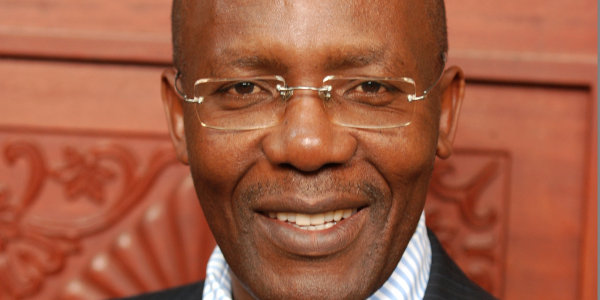
Eric Kimani
Eric Kimani
Two decades ago Eric Kimani saw an opportunity in Kenya’s dairy sector, at that stage dominated by the state-owned monopoly Kenya Co-operative Creameries (KCC). He says KCC was struggling to meet demand and there’d always be shortages. So despite having a good job, with perks such as a company car, the trained accountant and his wife Margaret began “hawking milk” in their spare time.
Kimani and his family were then living in Githunguri, an agricultural town about an hour from Nairobi, where they kept some dairy cows. They had to commute daily to Nairobi for work, so they’d transport milk in the trunk of the company car to sell in Nairobi.

“It was a very lucrative business. This house (a mansion in one of Nairobi’s upscale suburbs) was bought by money I made hawking milk. We hawked milk seriously for three years until we started buying milk from other farmers.
“In the mornings our garage was a busy place – just packing milk into small cans,” says Kimani. “It has been a very good business for us.”
In 1996 the couple set up micro dairy processing company Palmhouse Dairies and expanded their product portfolio to include pasteurised fresh milk, yogurts and cultured products (locally known as mala), in anticipation of a change in consumer tastes.
“About 15 years ago if you gave a Kenyan yogurt, most of them would throw up. But if you looked ahead, you could see one day Kenyans would have the income and the taste to enjoy yogurt. At that time, if you asked anyone to buy processed milk they would tell you: ‘I can drink straight from the cow’.
“Looking into the future and trying to predict it is important. For us seeing KCC was unable to sustain supplying the market was a huge opportunity that we have capitalised on,” he explains.
While running his dairy business, Kimani continued working in the corporate world. Eight years ago, at age 40, he eventually ‘retired’ from his last position as CEO of tyre company Sameer Africa. Since then he has focused on managing his business interests (which also include real estate and a primary school), philanthropy and motivational speaking. In 2011, he authored a book titledWisdom for Abundant Living.
Dairy industry still presenting opportunities
Today Kenya’s dairy industry is very different from what it was in the 1980s. After the market was liberalised in 1992, a few private players were established, but today the number of companies have risen dramatically. Walk into the dairy section of any supermarket and you will be bombarded with different brands of processed milk products.
Although there are a few big players, Kimani says there is opportunity for smaller dairies to compete – but one has to pay close attention to the details.
“I am fortunate because I have run big businesses, I know the intricacies of running a company. I have seen people set up dairies with no idea of the numbers. They think they are making money but after a few months they close down. By the 7th of every month I know all the numbers of what happened last month. I am able to quickly take corrective action where there is a problem,” he says.
Palmhouse Dairies sells most of its products to companies and institutions such as coffee chain Java House, Windsor Golf and Country Club, Muthaiga Country Club, and the Nairobi Serena Hotel, to name a few.
“I have been supplying Nairobi Hospital for the last 20 years, for example. What competitive advantage do I have over the big dairies? One is I offer a personalised service. We do 10,000 litres per day which means our product is always fresh because we don’t need to store it for days. It is possible for the milk I collect from farmers today to be at a patient’s hospital bed tomorrow. That is very unlikely for a bigger dairy,” he explains.
Kimani made a deliberate decision to only sell value-added products, such a yogurts and mala, through conventional retail outlets. He says pasteurised fresh milk had been a tough sell in supermarkets and small shops.
“Supermarkets require very high levels of credit. You have to finance them. It is also very competitive. That is why we decided to do a niche market and specialise on the five-star customer who wants personalised high level service and high level products. I don’t have the capacity to go to one shop to deliver 50 packets and then 200 packets. I want to do 500 packets or 1,000 litres – that way my distribution cost is very low.
“One time we decided to compete in the market with the big boys selling fresh milk to the mass market. We have never burnt our fingers that badly. It’s a volume business and it is very complicated. We would sell to wholesalers, some of whom would cheat and run away with the money. We also lost quite large amounts with distributors. That was a big mistake – for a couple of months we really suffered.”
Big, but not too big
Kimani has just acquired new machinery to grow the dairy business. But his focus is not to become Kenya’s biggest dairy player.
“I would like to make more money with the same effort and the same infrastructure… My idea is to grow the profitability – by deriving more value from the work we already do,” he says. “I spend 50% of my time making money and 50% of my time in philanthropy. I am happy with that balance. I don’t want to upset that balance.”